(This post may contain affiliate links. Read my full disclosure.)
Helping kids learn how to plan a project is one of the most powerful ways to strengthen their executive functioning skills. These skills—like organization, planning, time management, and flexible thinking—don’t come naturally to most children. They must be taught, practiced, and modeled.
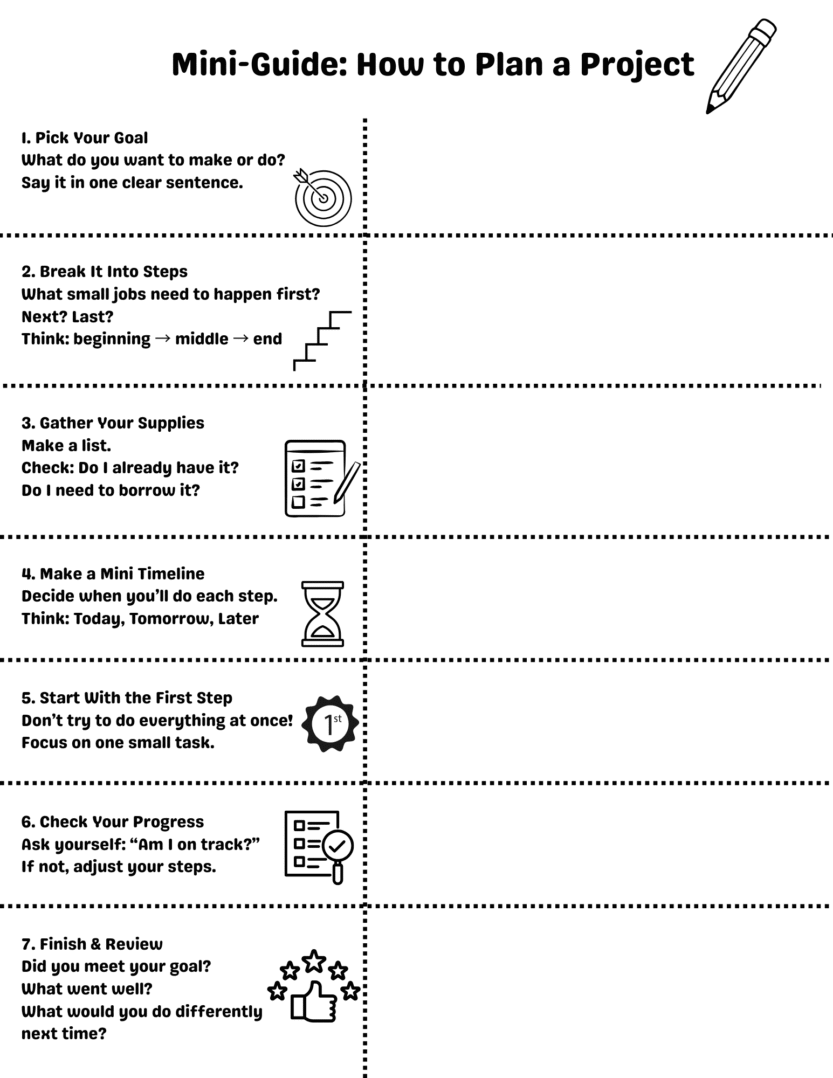
To make this easier, I created a simple “How to Plan a Project” mini-guide that breaks the process into seven child-friendly steps. Each step teaches a different part of executive functioning in a way that’s approachable for elementary students. Below, I’ll walk you through the purpose behind each step and why it matters.
Scroll to bottom for FREE download!
1. Pick Your Goal
Before any planning can happen, kids need clarity about what they are working toward. Many children jump into a project with only a fuzzy idea of the final result, which often leads to frustration or unfinished work.
Teaching kids to define the goal in one clear sentence supports:
- Task initiation: knowing exactly what to start
- Self-monitoring: recognizing progress
- Focus: keeping attention on a specific outcome
This step trains kids to think, “What am I really trying to make or do?”—the foundation for all effective planning.
2. Break It Into Steps
Big projects feel overwhelming to kids. Breaking a goal into smaller steps teaches them to sequence actions and understand that success happens through manageable chunks.
This step strengthens:
- Planning & prioritizing: identifying what needs to happen first
- Working memory: holding multi-step tasks in mind
- Cognitive flexibility: realizing there are many ways to reach a goal
Kids who learn to “chunk” tasks become more confident and independent problem-solvers.
3. Gather Your Supplies
This step teaches children to pause before starting and consider what materials or tools they will need. Without this skill, kids often begin a project only to discover halfway through that something essential is missing.
Benefits include:
- Organization: keeping track of items and resources
- Time management: preparing before starting
- Reduced frustration: avoiding mid-project interruptions
It’s a simple habit that leads to smoother, more frustration-free work.
4. Make a Mini Timeline
Kids rarely think about when tasks will be done unless prompted. Creating a basic timeline—using terms like Today, Tomorrow, Later—helps them understand pacing and responsibility.
This step reinforces:
- Time awareness: estimating how long tasks take
- Planning ahead: spreading out work instead of cramming
- Goal-directed persistence: sticking with a project over time
Even a simple timeline empowers kids to manage their own workflow.
5. Start With the First Step
Many children try to tackle a project all at once or jump to the “fun” part before finishing the basics. Teaching them to begin with the first step builds patience and logical thinking.
Key skills strengthened:
- Task initiation: knowing exactly where to begin
- Focus: avoiding distractions
- Impulse control: resisting the urge to skip steps
This step encourages thoughtful, sequential action.
6. Check Your Progress
Self-monitoring is one of the hardest executive functioning skills for kids. Building in a moment to stop, look at their progress, and adjust if necessary helps them learn how to evaluate their own work.
This step supports:
- Reflection: noticing what’s going well
- Flexible thinking: changing the plan when needed
- Responsibility: recognizing when effort needs adjusting
Checking progress turns kids into active problem-solvers instead of passive workers.
7. Finish & Review
Celebrating the end result is important—but reviewing the process is just as powerful. This step helps children build metacognitive awareness: thinking about how they worked, not just what they made.
Kids learn to reflect on:
- What went well
- What was challenging
- What they might do differently next time
This strengthens future planning and teaches resilience, growth mindset, and personal accountability.
Free Mini-Guide Worksheet Download
Teaching kids how to plan a project doesn’t have to be complicated. By breaking the process into seven simple steps, children learn how to think ahead, organize their ideas, manage their time, and finish what they start. These are skills they’ll use not only for schoolwork, but in daily life.
If you’d like a ready-to-use resource, I’ve created a printable worksheet using these exact steps to guide kids through planning their next project.
Terms of Use: These free worksheets are for homeschool, classroom, co-op, and personal use only. Homeschool Goldilocks free printables are never for commercial use. Thank you and enjoy!